









.DkNUKaKx_ZLAT4m.webp?dpl=dpl_Au634qxtCnaGHwTSpukv8FwHxmQD)









The SaaSpocalypse — a wave of AI-driven disruption reshaping enterprise software — has become the defining conversation in B2B tech. While the headlines focus on stock selloffs and collapsing SaaS multiples, teams are grappling internally with a harder reality: AI agents can now query data directly and rebuild tools companies paid six figures for.
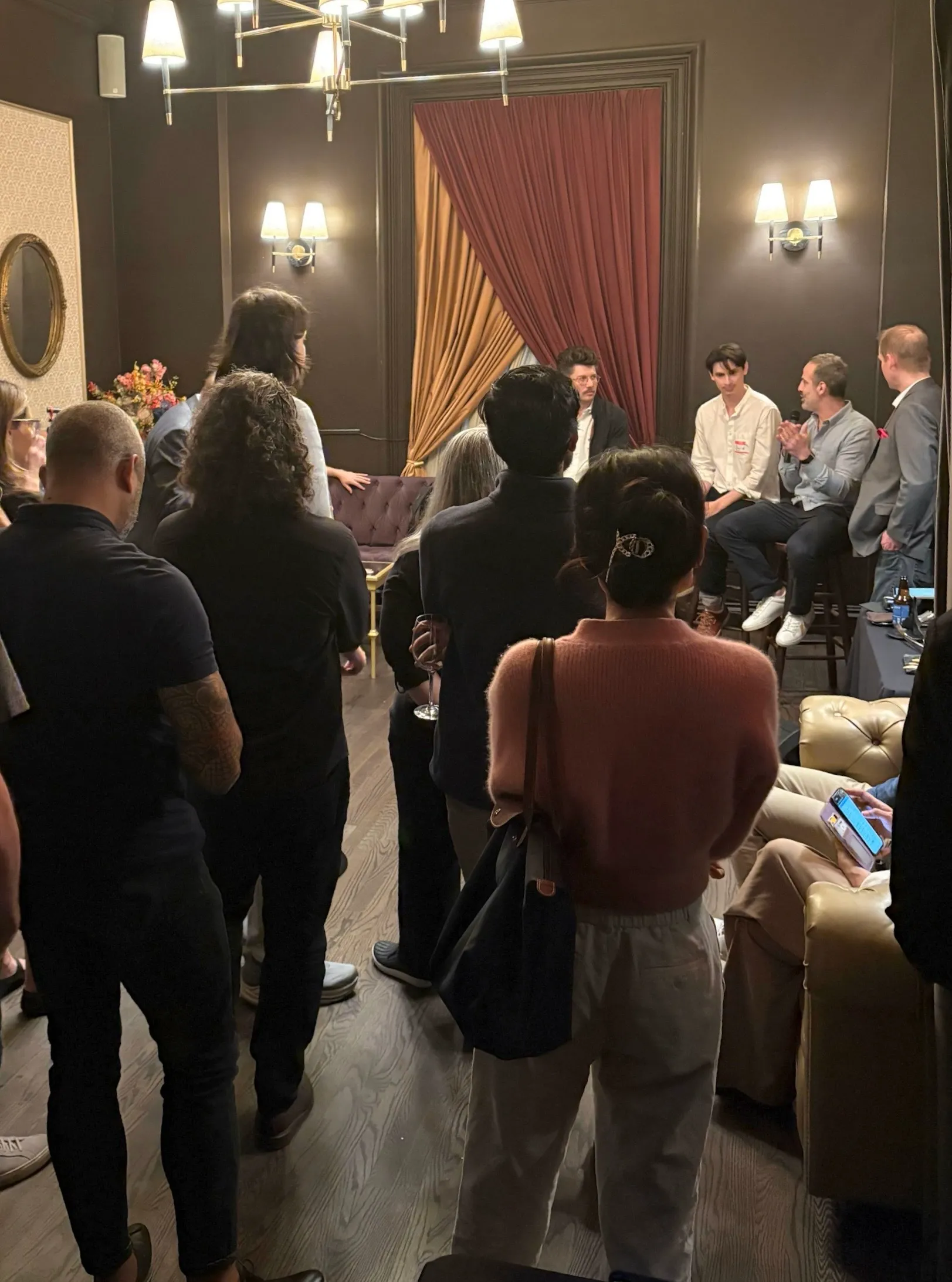
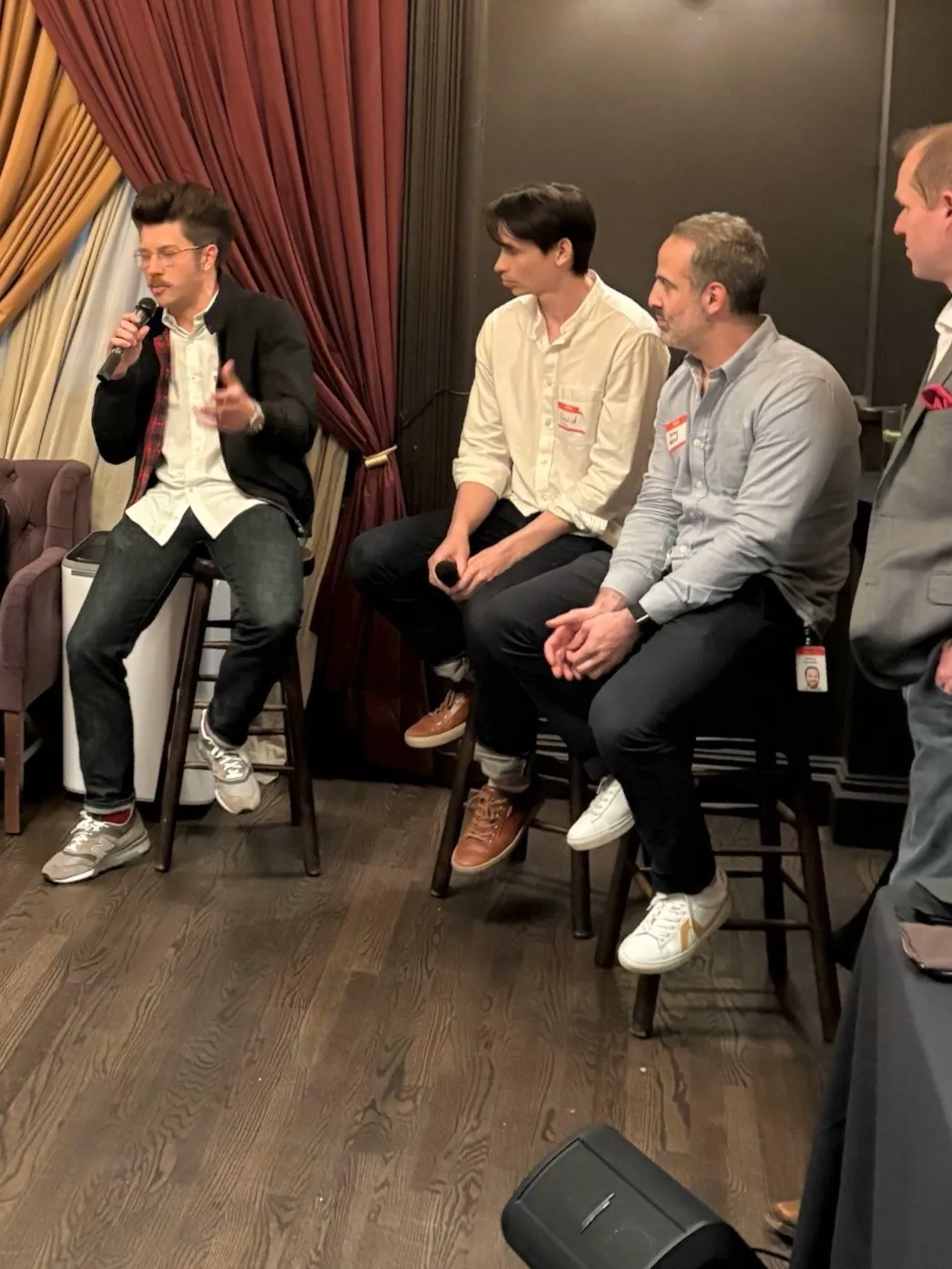
Tray convened practitioners living that reality in both San Francisco and New York. The NYC panel — hosted by Josh Noble, Field CTO at Tray, with leaders from Braze, Pendo, and Abridge — pushed past the SF discussion of governance and sprawl into harder territory: which vendors deserve to survive, how build-versus-buy changes when prototyping is nearly free, and what happens when software has to serve two kinds of users — human and machine.
Takeaway #1
2025 was the year of evaluating everything. 2026 is the year of cutting.
"2025 felt like you couldn't stop evaluating AI tools… not one vendor was doing everything really, really well. This year has been a clear consolidation movement, where we're really focusing on one or two core AI products and tools."
— David Willis, VP of Data Analytics and Growth Engineering, Braze
Every leader recognized the pattern. Last year, budget flowed toward promising tools and pilots launched weekly. This year, the energy has shifted to consolidation — narrowing to a small core teams can standardize on.
But consolidation carries its own costs: rewiring how a 2,000-person company operates, renegotiating contracts mid-cycle, and absorbing pricing changes mid-rollout. Braze felt all three at once. As it extended Claude across the company, its vendor moved it from seat-based to token-based pricing — turning a rollout into a budgeting problem. “How many tokens do we give to different types of employees?” Willis asked. “We’ve got over 2,000 people. Should a support person have the same number of tokens as an engineer?”
Consolidation isn’t just picking winners. It’s re-architecting cost, contracts, and access at the same time.
Takeaway #2
Token spend is the new cloud spend — and almost no one is governing it yet
"It feels like the same attention to cost that we all developed around cloud spend has been bumped down the priority stack for right now… I wonder when we'll find the need to operate with that same level of efficiency on token spend that we had with cloud spend for the last 10 to 20 years."
— Cooper Triggs, Lead Product Manager, Pendo
Ten years ago, cloud-spend governance didn’t exist either. Token consumption is in that same early, ungoverned phase — and the bill arrives silently. A customer horror story made the risk concrete: in three days, one employee burned $20,000 in tokens by polling Slack every minute for an automation they’d built. It should have been a webhook. Five minutes with IT could have caught it.
The pressure runs the other way, too. At Braze, engineers now ping leadership directly — “Hey, I ran out of tokens, can you approve my credit limit?” — because agents run continuously as part of the job. Most organizations still can’t answer the basic questions: which agents consume the most, on whose behalf, and toward what outcome? Until they can, every productive automation is an uncapped invoice waiting to happen.
Takeaway #3
Build vs. buy now starts with a harder question
"Just because you land first doesn't mean you're going to stay there."
— Jeremy von Halle, VP of Revenue Operations and Chief of Staff, Abridge
The old build-versus-buy decision was a cost-and-time calculation. Abridge described a more demanding version: an RFP evaluation that became an internal build because prototyping proved faster, safer, and better fitted to their own knowledge. As an AI-native company, von Halle noted, one of the “greatest joys” was “not having to de-Frankenstein a sales stack” — but that freedom comes with a never-ending obligation to re-test everything against what you could build instead.
His framework for pressure-testing any tool comes down to four questions. First, are people actually using it? “If people aren’t using your product, AI is not going to save you — you’re already going to die.” Second, does it drive the outcomes you’re trying to drive — and do people even understand what those outcomes are? Third, is it still competitive as the market shifts? And fourth, are you entrenched enough that switching genuinely hurts? “You need the relationships with those organizations,” he said. “If you don’t, you’re going to be replaced.”
A tool can pass the first two and still be a liability if it fails the last two — an uncomfortable reality for a lot of vendors right now.
Takeaway #4
System of record or system of intelligence — pick a side
"There are going to be basically two camps: system-of-record companies and system-of-intelligence companies. If you don't feel like you're a system-of-intelligence company, you're in trouble… You've got to be hard to extract. If a company can switch off of you by flipping a switch and they'd survive, you're in deep trouble."
— Jeremy von Halle, VP of Revenue Operations and Chief of Staff, Abridge
The same logic applies inside your own stack. The value of simply housing a particular dataset erodes once agents can assemble their own views from any system. The defensible position is making data trustworthy and usable — being a system of intelligence, not just a system of record. As Cooper Triggs put it, “the moat for just being a house for data is eking away.”
The practical test is blunt: could your customers turn you off and keep operating? If yes, the relationship is shallow and renewal is at risk. The internal tools that survive consolidation are the ones wired deeply enough into real work that removing them breaks something.
Takeaway #5
Your data model decides whether your tools survive the agent era
"If you don't have a really good data-modeling layer and a semantic layer — where the definitions are clear, not only how the data is created but what the data means — then your stuff can't be used through Claude. It's just going to be obsolete."
— David Willis, VP of Data Analytics and Growth Engineering, Braze
The BI-sprawl problem — Power BI in one corner, Tableau in another, Looker somewhere else — starts to solve itself in an unexpected way. When people query an agent instead of opening a dashboard, tools built on unclear data models simply stop getting used.
What replaces the dashboard is querying whatever an agent can reach — which makes the trustworthiness of the underlying data paramount. Tools that prove they’re a reliable source for a specific kind of data become more valuable than before, because the person asking trusts the answer without a purpose-built UI to guardrail it. As Triggs noted, “if tools can get good at being a trusted data source for this more nebulous new way to engage with data, then they’re going to win.” The semantic layer is no longer back-office hygiene — it decides whether a system has a future when agents are the primary consumers.
Takeaway #6
Software now has two users: the human and the machine
"We've obviously thought a lot about how humans interact with software — that's our bread and butter. Now, to flip that and think about how machines interact with our software, it's a whole different mind space: what is a good user experience for Claude? That's part of your product experience."
— Cooper Triggs, Lead Product Manager, Pendo
Good software used to mean a clean, intuitive interface for a person. Pendo has watched agents navigate tools in ways no human would — hammering the same tool repeatedly, surfacing incompatibilities between systems, optimizing for speed over readability.
A concrete warning came from Tray’s own experience. After moving a prompt-to-build flow into a Claude plugin, the agent shipped a workflow fast — but it was a wall of raw script steps no business user could maintain. Asked why, it explained it had simply assumed speed was the goal. Only after explicit guidance — use proper out-of-the-box connectors, keep it reviewable and auditable, extend a custom connector instead of dropping in raw code — did it produce something a business team could actually own. Agents do exactly what the surrounding structure encourages. So the structure has to encode what “good” actually means.
The SaaSpocalypse doesn’t come for the teams who admit they’re still figuring this out. It comes for the ones who assume their stack is safe because it worked last year.
Panelists: David Willis (Braze), Cooper Triggs (Pendo), and Jeremy von Halle (Abridge). Moderated by Josh Noble, Field CTO at Tray.
SaaSpocalypse Now · San Francisco
Seven takeaways from the SF edition
The SF panel centered on governance, sprawl, and the path to production — how to manage agents multiplying faster than anyone can track, and what a real path out of pilot looks like.
Read the San Francisco edition →