









.DkNUKaKx_ZLAT4m.webp?dpl=dpl_8yJRSbiE1G6s3QrAKF7yU51bW2sQ)








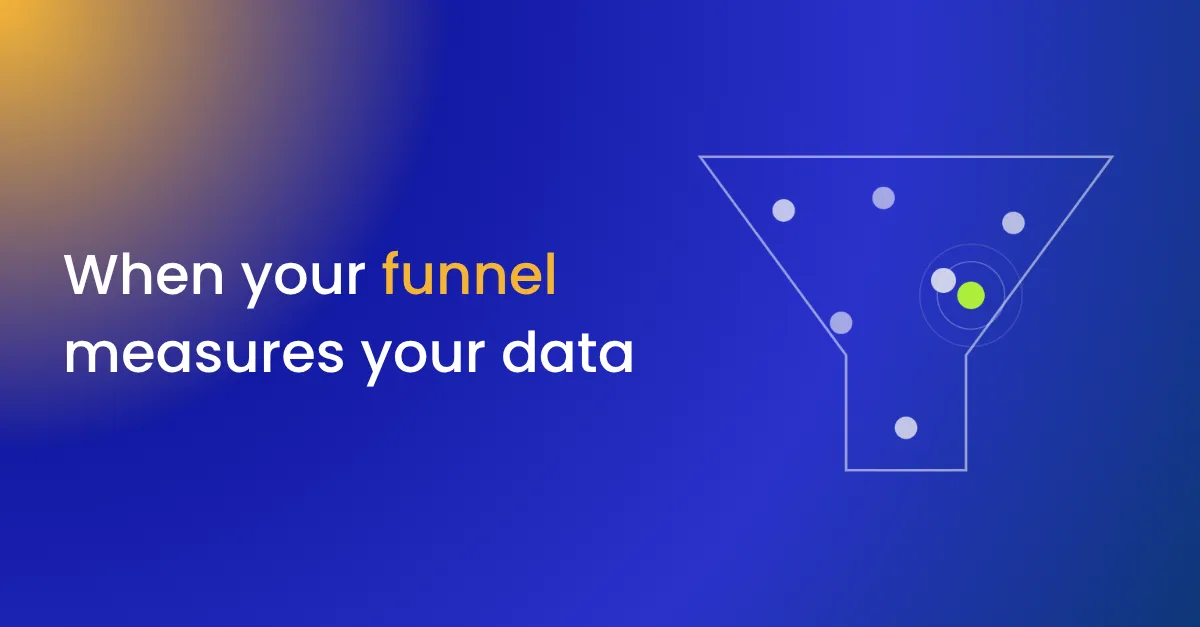
Every stage in the lead lifecycle writes to the same place, and the reporting reads from it. So the funnel report is a measurement of two things at once: how your demand is actually performing, and how consistently the five steps upstream wrote their records.
When those two get mixed up, the meeting goes badly in a particular way. Conversion is down 12% and nobody can say whether that is the market, the campaign, or a field that three-quarters of records stopped carrying in the spring.
What is CRM data hygiene?
CRM data hygiene is the ongoing work of keeping records complete, consistent, deduplicated and correctly owned, so that reports built on them describe the business rather than the state of the database.
It is ongoing rather than a project because the CRM has many writers. Forms, uploads, enrichment vendors, sales engagement tools, reps typing directly, and every integration anyone has ever built all write into the same object.
What actually degrades
Dummy and test records. Every integration test, every demo, every rep checking whether a form works leaves a record behind. They accumulate, and they count in reports.
Records owned by people who left. A rep leaves and their open opportunities and accounts stay assigned to an inactive user. The pipeline still shows them. Nobody is working them.
Inconsistent picklist and record types. Two teams use the same field differently, or an opportunity record type was renamed and old records kept the old value. Reports that group by that field now split one category into two.
Fields that silently stopped being populated. This is the one that matters most and gets caught last. An upstream source changed and a field that used to arrive on every record now arrives on some. The field still exists. Nothing errors. Every report that filters or groups on it quietly changes meaning.
Three things worth automating first
Purge dummy records on a schedule. Match on the patterns your team actually produces — test domains, known internal addresses, obviously fake company names — and remove them on a recurring run rather than in an annual cleanup.
Reassign records from inactive owners. When a user is deactivated, their open records should move to a defined successor or a managed queue automatically. Doing this by hand at the moment someone leaves is exactly when nobody has time.
Reconcile record types and picklists. Run a regular check for records carrying values that are no longer valid, and either correct them by rule or surface them for a decision.
Each of these is a recurring job rather than a one-off, which is the point. Hygiene done once is a cleanup. Hygiene done on a schedule is a control.
Why this became RevOps work
Data stewardship used to be an administrator’s job, sitting inside the CRM and using the CRM’s tools.
It moved because the data stopped being in one system. Product usage, warehouse tables, enrichment vendors and intent providers all feed the same records now, and keeping them consistent means reaching across systems rather than tidying within one. Gartner lists data stewardship as one of four RevOps areas it expects to be executed by agentic AI by 2028, alongside workflow management, revenue analytics and revtech administration.1
The teams who would traditionally build this are not available for it. IT teams spend an average of 36% of their time designing, building and testing new custom integrations, according to MuleSoft’s 2026 connectivity research.2 A recurring hygiene job does not compete well against that backlog, which is why it ends up being built by the ops team that needs it — and why it ends up living wherever that person could get it to run.
Why hygiene is the step that proves the others
Every other stage in the lifecycle produces a claim you can only check here.
Whether uploads are writing complete records. Whether enrichment is still resolving its usual share. Whether matching is attaching leads to the right accounts or creating quiet duplicates. Whether scoring inputs are still arriving. Whether routing is sending leads to people who still work here.
Without hygiene, each of those can fail for a full quarter and present as a demand problem. The six steps and where each one breaks covers the full chain, and lead processing pipelines covers why running the stages as one sequence makes these failures findable.
Which of your automations breaks first? Take the assessment — it ranks what your team already runs by who can change it, how you would find out it stopped, how many systems it touches, and what a break costs.
Sources
- Gartner, AI Agents Will Redefine How RevOps Drives Go-to-Market Success, Rietberg, O’Sullivan, Lopez, 9 July 2025, G00826255.
- MuleSoft, 2026 Connectivity Benchmark, 5 February 2026. Based on 1,050 IT leaders.
GARTNER is a registered trademark and service mark of Gartner, Inc. and/or its affiliates in the U.S. and internationally and is used herein with permission. All rights reserved.